
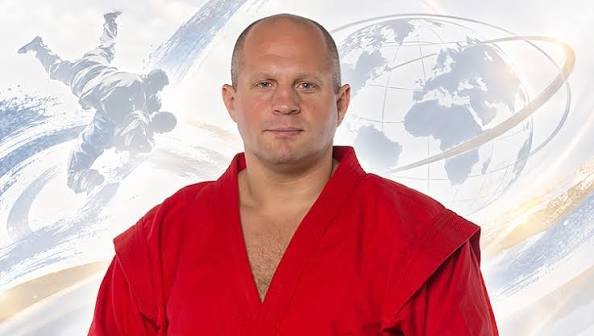
Some fighters enter the Octagon looking like superstars. Others spend years convincing the world that they deserve to be there.
And then there was Fedor Emelianenko.
He walked toward the cage with a quiet expression, almost as if he were arriving for an ordinary day’s work. No theatrical celebrations. No endless trash talk. No desperate need to convince anyone that he was dangerous.
Then the cage door closed.
Suddenly, the quiet man became one of the most frightening heavyweights the sport had ever seen.
Known as “The Last Emperor,” Fedor dominated the heavyweight landscape during the golden years of PRIDE Fighting Championships. He defeated champions, survived dangerous moments, and built a legacy that still inspires arguments about the greatest heavyweight in MMA history.
But his story is about more than winning fights. It is about humility in a sport built around violence, composure in moments of chaos, and the strange way a man who rarely demanded attention became impossible to forget.
The Man Who Made Greatness Look Ordinary
Fedor was born on September 28, 1976, in what is now Rubizhne, Ukraine, then part of the Soviet Union. He developed his martial arts background through judo and combat sambo before entering professional mixed martial arts in 2000.
He did not have the imposing physique many people associated with heavyweight champions. Standing around 6 feet tall, he often faced opponents who were larger, longer, or physically more intimidating.
But Fedor possessed something difficult to measure on a scale: extraordinary timing, explosive punching power, excellent balance, and the ability to transition between striking and grappling without hesitation.
His sambo background made him particularly dangerous in scrambles. He could throw opponents with judo-style techniques, attack submissions, and deliver devastating ground-and-pound once he gained the upper position.
What made him special was how naturally these skills came together.
He did not need to look dominant every second to win. Sometimes he would absorb pressure, find a split-second opening, and finish a fight before his opponent understood what had happened.
That unpredictability became part of his legend.
When PRIDE Belonged to Fedor
To understand Fedor’s legacy, you have to return to the era when PRIDE was one of the biggest stages in mixed martial arts.
The heavyweight division was filled with dangerous specialists and established champions. Every fight presented a different challenge, from elite wrestlers to powerful kickboxers and submission experts.
Fedor rose through that world with remarkable consistency.
In 2003, he defeated Antônio Rodrigo Nogueira to capture the PRIDE heavyweight championship. Nogueira was renowned for his Brazilian jiu-jitsu and had already established himself as one of the division’s most formidable fighters.
Fedor did not merely beat him once. He defeated Nogueira again in their subsequent championship encounters, establishing himself as the central figure in the division.
Then came the victories that made his reputation almost mythical.
He stopped Mirko Cro Cop in 2005 after one of the most anticipated heavyweight matchups of the era. He also defeated Mark Coleman, Kevin Randleman, Mark Hunt, and other elite opponents.
His victory over Randleman in 2004 was particularly memorable. After being lifted and slammed onto his head, Fedor recovered, escaped the danger, and eventually submitted his opponent.
It was the kind of moment that captured his character as a fighter: a frightening situation, a split-second response, and a refusal to accept that the fight was already lost.
During his prime, Fedor went years without suffering a clear defeat, and he became widely regarded as the world’s leading heavyweight. His dominance extended across the PRIDE era and beyond, earning him a place among the most celebrated fighters of his generation.
The Loss That Changed Nothing About His Greatness
In June 2010, Fedor faced Fabricio Werdum in Strikeforce.
Fedor entered the fight as the favorite, and when he knocked Werdum down early, it seemed that another victory might be on the way.
But Werdum recovered and caught Fedor in a triangle choke, forcing him to submit.
The defeat stunned the MMA world.
For years, Fedor had appeared almost untouchable. Now, one mistake had changed the result in seconds.
He would suffer further defeats, including losses to Antonio Silva and Dan Henderson, and the aura of invincibility that surrounded him began to fade.
Yet something important remained.
Fedor’s greatness had never depended on the claim that he could not lose. It came from the quality of the opponents he defeated, the length of his dominance, and the skills he displayed against different styles.
Even the end of his unbeaten run could not erase what he had already accomplished.
There is a difference between a fighter who is never defeated and a fighter whose achievements remain extraordinary after defeat. Fedor’s legacy belongs to the latter category.
The Quietness Was Part of the Legend
One of the most striking things about Fedor was the contrast between his personality and his profession.
MMA rewards confidence, and sometimes it rewards controversy. Fighters build brands by making bold promises, confronting opponents, and ensuring that the cameras remain focused on them.
Fedor rarely relied on that approach.
He was known for his reserved demeanor and respectful treatment of opponents. His calm expression became almost as recognizable as his explosive right hand.
That contrast made him compelling.
The man who could dismantle an elite heavyweight in minutes often appeared entirely unbothered by the attention surrounding him. He seemed comfortable allowing his performances to speak for themselves.
For fans, there was something deeply relatable about that. Not everyone wants to be the loudest person in the room. Sometimes the person who works quietly, prepares carefully, and delivers when it matters earns the deepest respect.
Fedor became a symbol of that idea in a sport where the consequences of failure could be immediate and brutal.
His Final Fight Was Not His Whole Story
Fedor eventually continued his career in Bellator, where he collected further victories and competed against another generation of heavyweights.
In February 2023, he faced Ryan Bader for the Bellator heavyweight championship in what became his retirement fight. Bader stopped him by technical knockout in the first round.
It was not the ending many fans would have chosen for a legend.
But careers are not stories in which every chapter must finish with a victory. Sometimes the final result is simply the last page, not a verdict on everything that came before it.
Fedor retired with a professional record of 40 wins, seven losses, and one no-contest. His career included championship success in PRIDE, major victories across several promotions, and a remarkable period of heavyweight dominance.
Those achievements do not disappear because of one final defeat.
The Last Emperor did not need to leave the cage undefeated to leave the sport with an extraordinary legacy.
Why They Still Call Him the Last Emperor
Nicknames can be manufactured. Legacies cannot.
Fedor’s nickname endured because it came to represent a particular era of MMA: an era when PRIDE’s heavyweight division was a gathering place for some of the sport’s most dangerous competitors, and one quiet Russian fighter repeatedly found ways to defeat them.
He was not the biggest heavyweight. He was not the loudest personality. He did not need to be.
He possessed speed, technique, composure, and an unusual ability to make difficult situations look manageable. More importantly, he remained a compelling figure even after the wins stopped coming so easily.
His story reminds us that greatness is not the same as perfection. It is possible to lose, to decline, and to reach the end of a career without diminishing what made that career special in the first place.
Fedor Emelianenko gave MMA some of its most memorable heavyweight performances. He helped define PRIDE’s golden era and inspired generations of fighters and fans.
And perhaps his most lasting lesson has little to do with fighting.
You do not always have to announce your greatness. You do not have to demand respect from everyone. Sometimes you simply keep working, meet every challenge you can, and let time reveal what you have built.
Fedor Emelianenko was called the Last Emperor because he ruled an era. He is remembered because, long after that era ended, people still have reasons to look back.
The cage door has closed on his career. The debate about his place among MMA’s greatest heavyweights continues.
And that is how a legend lives on.