
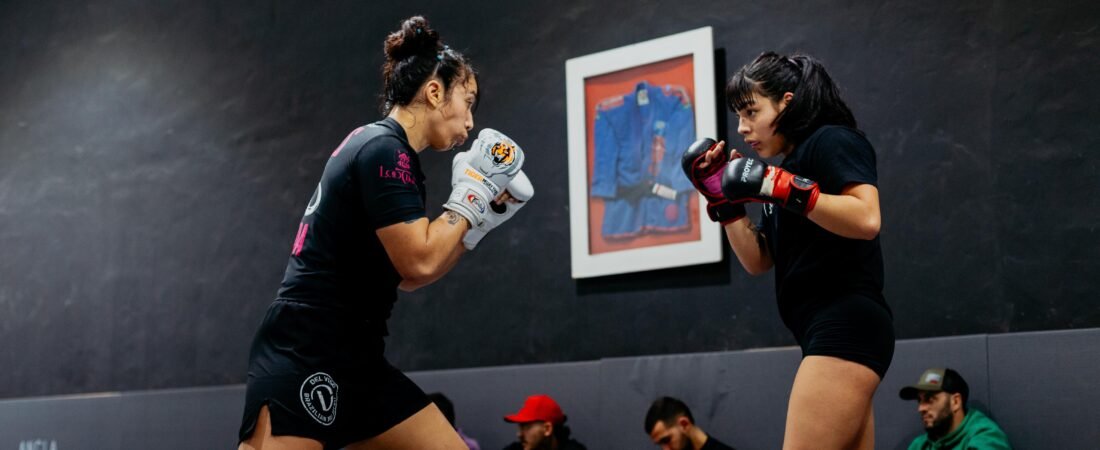
Women’s mixed martial arts is open to women with different fitness levels, athletic backgrounds, and experience. You do not need to be a professional athlete or have previous martial arts training to begin. The important steps are finding a suitable gym, learning fundamental techniques, and building skills gradually under qualified coaching.
MMA combines several disciplines, including boxing, kickboxing, wrestling, and Brazilian jiu-jitsu. Beginners learn how to strike, defend themselves, control an opponent, and transition safely between standing and ground positions.
If you are interested in learning women’s MMA for fitness, confidence, self-defense, or eventual competition, this guide explains how to get started.
1. Find a Suitable MMA Gym
Your first step should be choosing a gym with qualified coaches and a beginner-friendly training environment.
Look for a facility that teaches multiple martial arts rather than focusing exclusively on striking or grappling. A complete MMA program should eventually cover stand-up fighting, takedowns, ground control, and submission defense.
Before joining, consider these factors:
- Coaching experience: Look for instructors with relevant qualifications and experience teaching beginners.
- Safety standards: Coaches should explain techniques clearly, supervise practice, and take injuries seriously.
- Beginner classes: A dedicated introductory class can make learning easier.
- Training partners: Choose an environment where students respect one another and follow instructions.
- Women’s participation: A gym with women in its classes may help beginners find suitable training partners and feel more comfortable.
Ask whether you can observe a class or attend a trial session before committing to a membership.
The best gym is not necessarily the one with the most trophies. For a beginner, quality instruction, safety, and consistent learning matter more.
2. Learn the Main Martial Arts Used in MMA
MMA combines different fighting systems. Each develops skills that become useful when integrated into a complete game plan.
Boxing and Kickboxing
Striking disciplines teach punching, kicking, footwork, distance management, and defensive movement.
Beginners typically start with stance, balance, basic punches, simple combinations, and how to protect themselves from incoming attacks. Kickboxing adds kicks and, depending on the ruleset, other striking techniques.
Good striking is not simply about hitting hard. Timing, accuracy, defense, and maintaining balance are essential.
Wrestling
Wrestling teaches fighters how to take opponents to the ground, defend takedowns, maintain position, and escape unfavorable situations.
These skills are particularly important because an MMA fight can move from standing exchanges to grappling within seconds.
Beginners should focus on movement, balance, basic takedown mechanics, and defensive positioning before attempting advanced techniques.
Brazilian Jiu-Jitsu
Brazilian jiu-jitsu, commonly called BJJ, focuses on ground control, positional escapes, and submission techniques.
Students learn positions such as guard, side control, and mount, along with methods for improving position or escaping an opponent’s control.
In MMA, BJJ must be adapted to account for strikes and the possibility of returning to a standing position. Learning under a coach who understands MMA can help beginners connect grappling skills to the wider sport.
3. Build Your Fitness Gradually
You do not need elite fitness before attending your first class. Training itself can help develop conditioning, coordination, strength, and endurance over time.
However, beginning with a manageable workload makes it easier to recover and remain consistent.
Useful areas to develop include:
- Cardiovascular endurance: Walking, cycling, swimming, or other aerobic exercise can help improve stamina.
- Strength: Basic resistance exercises can support general physical development.
- Mobility: Comfortable movement through the hips, shoulders, and ankles can help with training.
- Coordination: Footwork drills and controlled technical practice improve movement.
- Recovery: Adequate sleep, hydration, and rest between demanding sessions support adaptation.
Start at a level appropriate for your current fitness. Increase training volume gradually rather than trying to match experienced fighters immediately.
If you have an injury, a health concern, or have been inactive for a long time, seek appropriate professional advice before starting strenuous exercise.
4. Get the Essential MMA Equipment
Most beginners do not need to purchase a complete professional equipment collection.
Ask your gym what is required for the first class. Many facilities can advise on suitable equipment or provide some items for introductory sessions.
Common equipment includes:
- MMA or boxing gloves: Used for striking drills and bag work, with the appropriate type determined by the class.
- Hand wraps: Help support and protect the hands during striking training.
- Mouthguard: Protects the teeth and mouth during contact training.
- Shin guards: Commonly used for controlled kickboxing practice.
- Rash guard and training shorts: Suitable clothing for grappling and MMA drills.
- Water bottle and towel: Useful for every training session.
A properly fitted mouthguard and suitable protective equipment are especially important when contact is involved.
Do not buy expensive equipment before speaking to your coach. Requirements differ between gyms, and beginners can often start with a small selection of essentials.
5. What Happens During Your First MMA Class?
A beginner’s class usually introduces fundamental movements rather than expecting students to compete immediately.
A typical session may include a warm-up, technical instruction, partner drills, and conditioning. The exact structure depends on the gym and the discipline being taught.
You may practice a basic stance, controlled movement, simple punches, defensive positioning, or introductory grappling movements.
Tell the coach that you are new and ask questions whenever you do not understand a technique. It is better to learn a movement slowly and correctly than to perform it quickly with poor form.
You should not feel pressured to participate in hard sparring during your first class. Technical drills and controlled practice are more appropriate ways to develop the foundations of the sport.
6. How Often Should Beginners Train?
A reasonable starting point for many healthy beginners is two or three sessions per week, depending on class intensity, existing fitness, and recovery.
This is a starting suggestion rather than a universal prescription. Some people may need less training initially, while others with an established athletic background may tolerate more.
Consistency matters more than training every day.
Allow time to recover between demanding sessions, and tell your coach if you experience unusual pain, persistent fatigue, dizziness, or other concerning symptoms.
As your technique and conditioning improve, your coach can help you decide whether to increase training frequency.
7. A Simple Three-Month Beginner Roadmap
Progress differs from person to person, but a structured introduction can help you understand what to focus on.
Month One: Learn the Fundamentals
Focus on attending classes consistently, understanding basic gym rules, developing a stable stance, and learning introductory striking and grappling movements.
The main goal is familiarity with training, not fighting ability.
Month Two: Improve Technique and Defense
Continue practicing fundamentals while improving balance, movement, defensive positioning, and basic escapes.
You may begin connecting individual movements into simple combinations under your coach’s supervision.
Month Three: Develop Integration
Work on combining striking, takedown defense, and grappling transitions in controlled drills.
Your coach may introduce more complex partner exercises if you are ready. Progress should depend on technique, control, and safety rather than an arbitrary deadline.
Completing three months of training does not automatically make someone ready for competition. Readiness depends on individual development and a coach’s assessment.
8. Is Sparring Necessary for Beginners?
Sparring can be an important part of MMA training, but it does not need to begin immediately or involve hard contact.
Beginners can develop many foundational skills through pad work, bag work, positional grappling, technical partner drills, and controlled exercises.
When sparring is introduced, it should be appropriate to the student’s experience and supervised by a qualified coach. Both partners should understand the intensity, rules, and techniques permitted during the session.
Hard sparring is not a requirement for every training session, and repeated head impacts should not be treated as proof of toughness.
If you experience symptoms that could indicate a concussion, stop training and seek appropriate medical assessment. Do not return to contact training until medically cleared when required.
9. Can You Start Women’s MMA Without Previous Experience?
Yes. Many people begin MMA without having trained in boxing, wrestling, or another martial art.
Your starting point may influence which areas require the most practice. For example, someone with a gymnastics background may have useful coordination and mobility, while someone with a wrestling background may already understand balance and takedown mechanics.
However, previous experience is not essential. Beginners can develop the relevant skills through regular instruction and practice.
Age, fitness, and physical characteristics may affect an individual’s training approach, but they do not automatically prevent someone from learning MMA. The appropriate program should account for individual ability and safety.
Frequently Asked Questions
Is women’s MMA suitable for complete beginners?
Yes. A beginner-friendly gym can teach the fundamentals progressively, even if you have never trained in a martial art before.
How long does it take to learn MMA?
Basic movements can be introduced in early classes, but developing reliable skills takes sustained practice. The time required depends on training frequency, coaching, experience, and individual progress.
Do I need to lose weight before starting MMA?
Not necessarily. You can begin at your current fitness level and work toward appropriate goals with qualified guidance. Weight cutting for competition is different from general fitness and should not be attempted casually.
Can women train in MMA without competing?
Yes. Many people train for fitness, technical development, confidence, and enjoyment without entering amateur or professional competition.
Is MMA safe for beginners?
MMA involves physical risks, but appropriate coaching, controlled drills, protective equipment, and sensible progression can help manage them. No combat sport is completely risk-free.
Final Thoughts
Starting women’s MMA does not require previous martial arts experience, exceptional fitness, or expensive equipment. It requires a suitable training environment, a willingness to learn, and a commitment to developing skills gradually.
Begin with fundamental striking and grappling, build your conditioning over time, and prioritize safe practice over rushing into sparring or competition.
With consistent training and qualified instruction, beginners can develop a stronger understanding of MMA and decide how far they want to take their journey in the sport.