
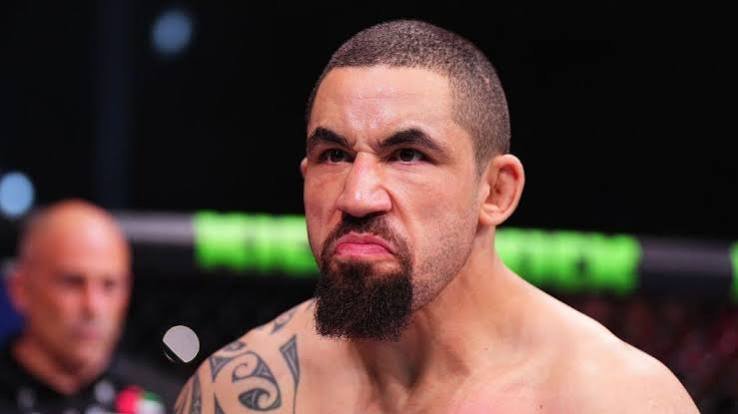
Robert Whittaker’s journey to becoming a UFC champion was built on discipline, sacrifice, and the ability to recover from difficult moments. He reached the top of the middleweight division, lost his championship to one of the most dominant fighters of his era, and then faced a new challenge: proving that he still belonged among the best.
What makes Whittaker’s story remarkable is not simply that he became a champion. It is how he responded when things stopped going his way. From health problems and personal struggles to a devastating title loss, he repeatedly found ways to rebuild himself and return to elite competition.
From Young Prospect to UFC Contender
Born in Auckland, New Zealand, in 1990, Robert Whittaker grew up in Australia and developed an interest in martial arts at an early age. He trained in karate before transitioning to mixed martial arts, where his speed, striking ability, and competitive mindset helped him stand out.
Whittaker entered the UFC in 2012 after winning The Ultimate Fighter: The Smashes, a reality competition featuring Australian and British fighters. However, his early UFC career was not without difficulties. He suffered defeats against Court McGee and Stephen Thompson, exposing weaknesses that he needed to address.
Rather than remain stuck in the same position, Whittaker made a major career decision. He moved from welterweight to middleweight, a change that helped him compete more comfortably and develop his full potential.
The results were impressive. Whittaker began defeating established opponents and gradually built a reputation as one of the division’s most dangerous contenders.
The Rise of a Champion
Whittaker’s breakthrough came in 2017. He defeated Derek Brunson with a first-round knockout and then faced Yoel Romero for the interim UFC middleweight championship.
Their fight at UFC 213 was an exhausting contest against one of the division’s most physically imposing athletes. Whittaker suffered significant damage but remained composed, using his movement and striking to secure a unanimous decision victory.
The win made him the interim champion. When Georges St-Pierre later vacated the undisputed middleweight title, Whittaker was promoted to undisputed champion.
After years of hard work, he had reached the summit of the division.
However, holding a championship can be just as challenging as winning one.
Injuries and a Difficult Period
Whittaker’s first scheduled title defence against Kelvin Gastelum was cancelled in February 2019 after Whittaker suffered an abdominal injury that required emergency surgery.
The situation was a major setback. He had worked hard to become champion, only to find himself unable to compete when an important opportunity arrived.
Whittaker eventually returned in October 2019 to face Israel Adesanya in a title unification bout at UFC 243. Adesanya was a rising star with exceptional striking, and the matchup attracted enormous attention.
Whittaker fought aggressively, but Adesanya used his timing and precision to secure a second-round knockout. Whittaker lost his championship and suffered one of the most painful defeats of his career.
For a fighter who had worked so hard to reach the top, losing the belt was a difficult moment. Yet it was also the beginning of another chapter.
Rebuilding After Losing the Championship
Following the defeat, Whittaker faced a choice. He could rush back into another title fight or take the time to improve and rebuild his confidence.
He chose the harder but more sustainable route.
Whittaker returned to the Octagon in 2020 and defeated Darren Till by unanimous decision in a technical contest. He followed that performance with victories over Jared Cannonier and Kelvin Gastelum.
These were not merely wins on his record. They demonstrated that Whittaker had adapted his approach, improved his tactical discipline, and learned to manage fights against elite opponents without relying entirely on aggression.
His victory over Cannonier was particularly significant because Cannonier was considered a serious threat to the division’s leading contenders. Whittaker controlled the fight and showed that he remained one of the most complete middleweights in the sport.
By defeating Gastelum in April 2021, Whittaker secured a second consecutive victory after his return and strengthened his case for another championship opportunity.
He had not regained the belt, but he had successfully rebuilt his position.
Another Shot at Israel Adesanya
In February 2022, Whittaker finally received a rematch against Israel Adesanya at UFC 271.
The contest represented an opportunity to correct the mistakes of their first meeting. Whittaker showed improvements in his wrestling and overall strategy, making the rematch more competitive than their previous fight.
Although Adesanya won by unanimous decision and retained the championship, Whittaker demonstrated that he could compete at the highest level even after losing his title.
The result was disappointing, but it did not end his comeback story.
Whittaker continued to face elite competition, defeating Marvin Vettori and later securing an impressive first-round knockout victory over Ikram Aliskerov in June 2024. The win reinforced his reputation as a dangerous contender capable of delivering outstanding performances against younger opponents.
His journey was no longer just about recovering from one championship loss. It had become a story of longevity and continued excellence in one of MMA’s toughest divisions.
The Legacy of Robert Whittaker’s Comeback
Robert Whittaker’s career illustrates that a setback does not have to destroy everything a fighter has achieved. Losing a championship can change a career, but it does not erase the skills, experience, and determination that made someone a champion in the first place.
Whittaker faced injuries, difficult defeats, and repeated challenges against elite opponents. Rather than allowing those experiences to define him, he continued improving and competing at the highest level.
His story is different from a comeback that ends with a dramatic championship victory. Whittaker’s achievement lies in his ability to rebuild, remain relevant, and repeatedly prove himself against the best fighters in the world.
For aspiring fighters and MMA fans, his journey offers a valuable lesson: resilience is not always about returning to the exact place you once occupied. Sometimes, it means finding the strength to keep moving forward, even when the outcome is uncertain.
Robert Whittaker’s road back to the top demonstrates that true greatness is measured not only by championships, but also by how a fighter responds when those championships are lost.